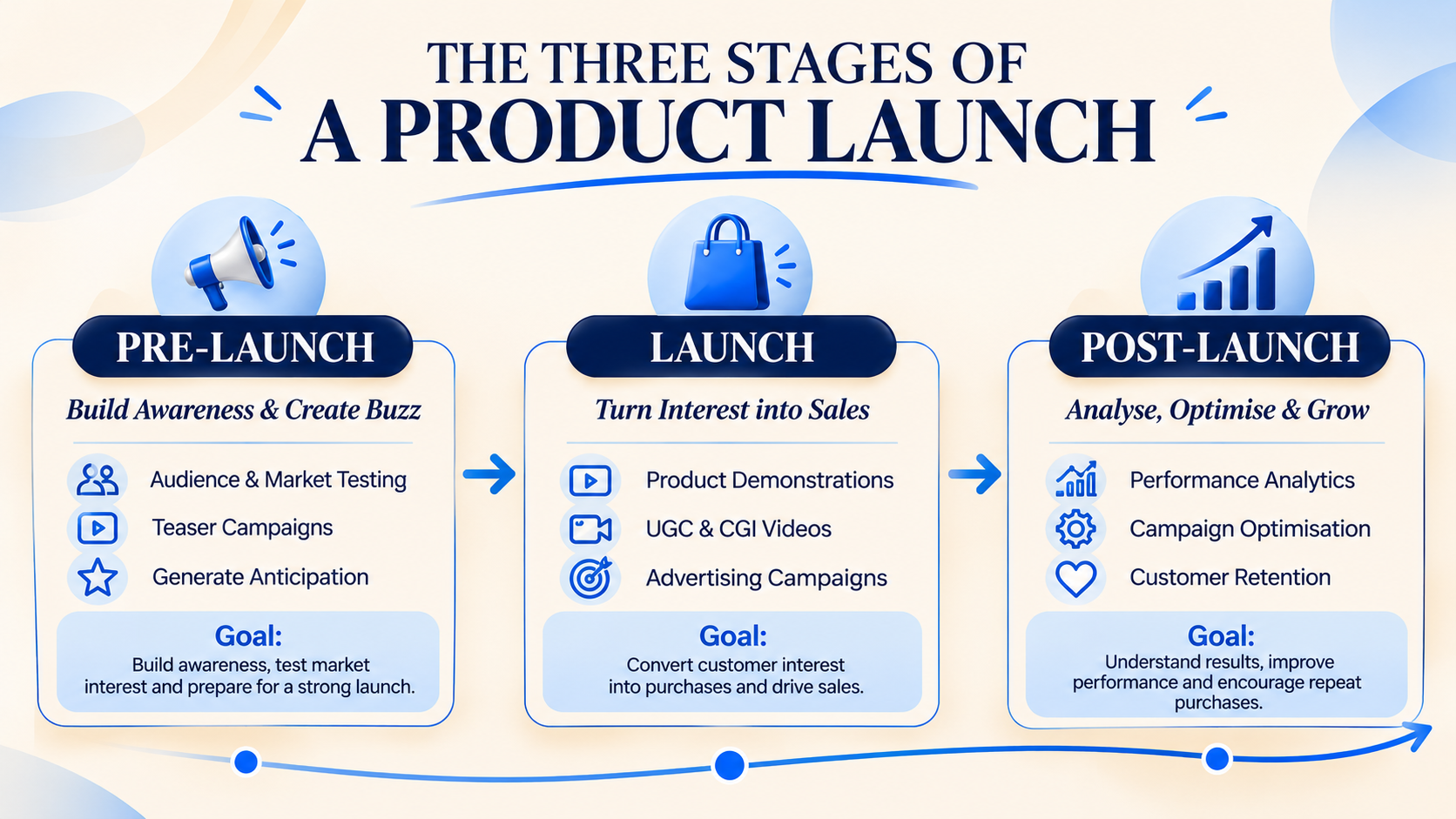
Launching a product is not just about making it available in the market. It is about reaching the right audience, creating interest, convincing customers to take action and building relationships that last beyond the first purchase.
However, many businesses make one common mistake: they follow the same marketing approach before, during and after a product launch. The reality is that every stage has a different objective and requires a different strategy.
Philip Kotler's marketing principles, including the Marketing Mix (4Ps) and Customer Relationship Management, offer useful perspectives on how businesses can respond to changing customer needs throughout a product's journey.
Let's explore the three important stages of a product launch and understand how businesses can approach each one more effectively.
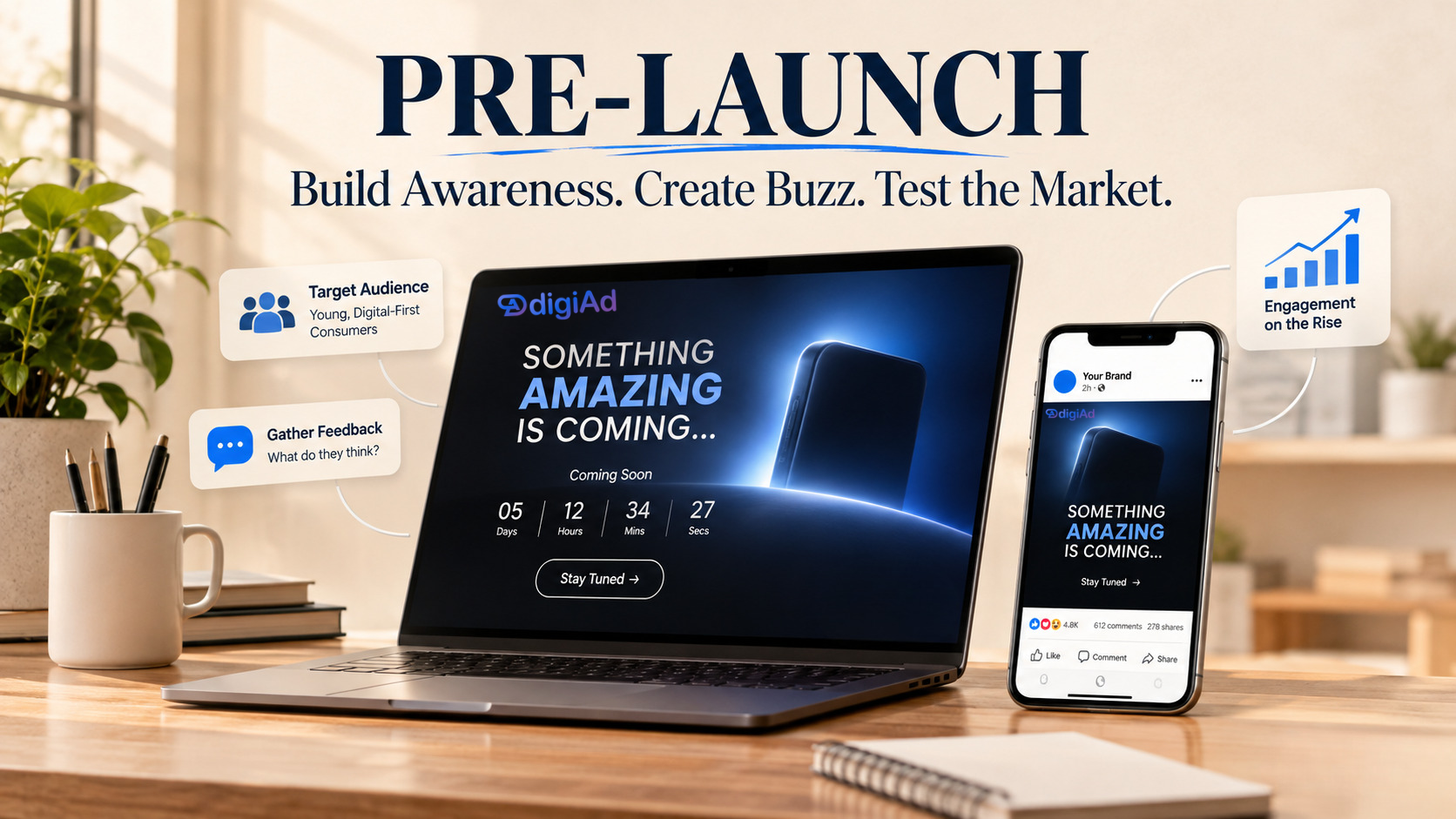
1. Pre-Launch: Build Awareness, Create Buzz and Test the Market
The challenge: How do you make people interested in a product before it is even available to buy?
A product launch doesn't really begin on the day a product enters the market. Businesses often start working much earlier to make people aware of what's coming and build excitement around it.
But creating buzz is only one part of the process. Businesses also need to understand whether people are actually interested in the product. The audience selected during initial research may look right on paper, but real customer responses can sometimes tell a different story.
That's why the pre-launch stage is important. It gives businesses an opportunity to test their assumptions, understand what attracts potential customers and make improvements before the official launch.
What should businesses focus on?
- Build awareness about the product and create curiosity around it.
- Try different audience segments to understand who shows the most interest.
- Experiment with different messages and product features to see what connects with people.
- Share teaser campaigns and visuals to keep the audience interested.
- Collect early feedback and engagement to understand market response.
- Use these insights to refine the marketing message and prepare for a stronger launch.
For instance, a business may initially feel that its product is suitable for several customer groups. But after testing different audiences, it may discover that some groups show much more interest than others. Similarly, a particular feature or message may attract more attention than the business originally expected.
These responses help businesses understand what to focus on before launching.
To support this process, digiAd AI's AI Image Builder can help create product-focused promotional visuals, while AI Custom Templates can help maintain a consistent look across teaser campaigns. The Digital Ad Planner can also support campaign planning throughout the product journey.
The idea is simple: don't wait until launch day to find out whether people are interested. Build awareness, create buzz, test your ideas and use what you learn to make the actual launch stronger.

2. Launch: Turn Interest into Sales
The challenge: How can businesses convert the excitement around a product into actual purchases?
Once a product is officially available, the focus shifts from creating anticipation to convincing customers to take action. People may know about the product, but awareness alone does not guarantee sales. Businesses need to communicate its value clearly, build trust and give customers a reason to choose it over competing options.
What should businesses do?
- Create product demonstration videos to show how the product works.
- Use UGC-style videos to present the product through relatable experiences.
- Highlight product benefits through engaging images and videos.
- Introduce launch offers, promotional campaigns and clear calls to action.
- Run campaigns across relevant advertising platforms.
- Test different creative formats and messages to understand what drives conversions.
For example, a brand launching a new serum can create a product demonstration showing its texture and application, a UGC-style video sharing a customer's experience, and a visually engaging product advertisement highlighting its key benefits.
Each creative communicates the same product in a different way, helping the brand connect with different customer preferences.
With digiAd AI, businesses can create different types of launch content without depending entirely on traditional shoots. The AI UGC Video Generator helps create creator-style videos, while the AI CGI Video Generator transforms product images into cinematic product videos.
Businesses can also use AI-generated images and custom templates to develop multiple creative variations. These creatives can support campaigns across supported Meta and Google platforms through digiAd AI's campaign workflow.
The objective is to turn the awareness and anticipation built before launch into customer interest, conversions and sales.
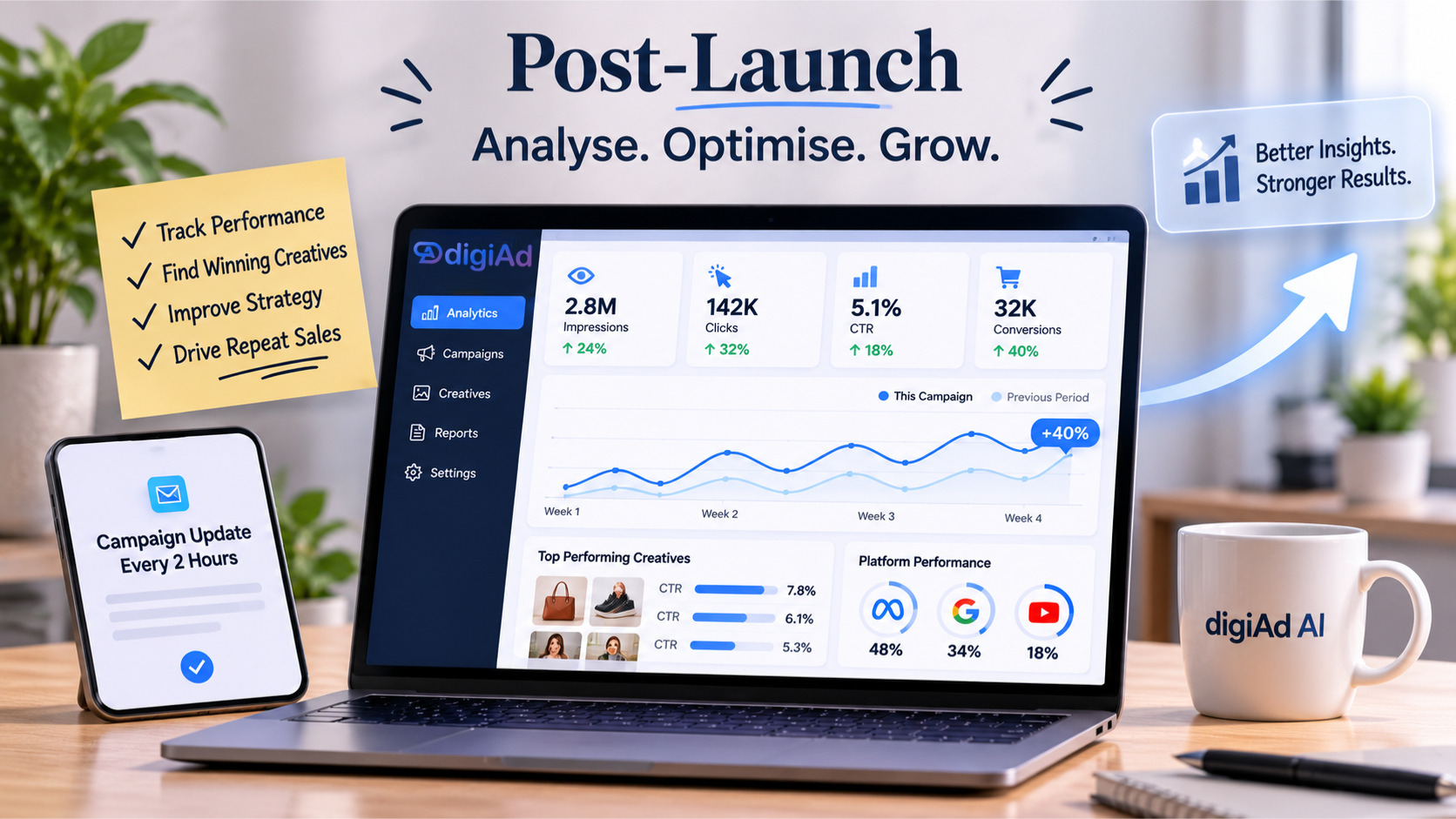
3. Post-Launch: Analyse, Optimise and Build Long-Term Growth
The challenge: How can businesses maintain momentum after the initial launch excitement fades?
A successful launch is only the beginning. Once campaigns are running and customers start interacting with the product, businesses need to understand what is working, what is not and where improvements are needed.
Without analysing performance, businesses may continue spending on campaigns that are not delivering results or miss opportunities to improve their marketing strategy.
What should businesses do?
- Regularly review important campaign metrics such as reach, clicks, impressions and conversions.
- Compare creative performance to identify what attracts customer attention.
- Collect customer feedback and identify areas for product or service improvement.
- Refresh advertising creatives when performance starts declining.
- Use retargeting to reconnect with people who showed interest but did not purchase.
- Develop campaigns that encourage repeat purchases and customer loyalty.
For example, a brand may discover that its UGC-style videos generate more engagement than its product-focused static advertisements. This insight can help the business adjust its creative strategy and invest more effort in formats that connect better with its audience.
Similarly, customer feedback may reveal product concerns that need attention. Understanding these responses can help businesses improve both their marketing communication and customer experience.
This is where digiAd AI's Performance Analytics becomes useful. It brings connected campaign and social media performance data into one dashboard, helping businesses monitor important metrics, compare creative performance, access AI-powered insights and export reports.
These insights help marketers understand campaign results and make more informed decisions about future activities.
The objective is not simply to maintain sales after launch, but to improve marketing performance, strengthen customer relationships and create opportunities for long-term growth.
One Product, Three Stages, Three Different Strategies
A product launch is not a single marketing event. It is a continuous process in which business objectives evolve with customer awareness and behaviour.
| STAGE | PRIMARY OBJECTIVE | MARKETING FOCUS |
|---|---|---|
| Pre-Launch | Build awareness | Audience engagement, creating buzz, advertising plans and content creation |
| Launch | Drive action | Product promotion, engaging creatives, videos and campaign execution |
| Post-Launch | Improve and retain | Performance analytics, creative optimisation and customer relationships |
Final Thoughts
Successful product marketing is not about doing more marketing. It is about doing the right marketing at the right time.
Pre-launch builds awareness and creates anticipation. Launch turns that interest into action. Post-launch helps businesses understand their performance, improve their strategies and build lasting customer relationships.
Each stage requires a different approach, but all three need to work together.
With digiAd AI, businesses can bring advertising planning, creative generation, video creation, campaign execution and performance analytics into a connected workflow.
Because a successful product launch is not just about making an entrance. It's about building momentum that lasts.
Frequently Asked Questions
The three main stages are pre-launch, launch and post-launch. Pre-launch focuses on building awareness and creating buzz, launch focuses on promoting the product and driving sales, while post-launch involves analysing performance, optimising campaigns and building customer relationships.
Pre-launch marketing strategies help businesses generate interest before a product becomes available. They also allow businesses to test audience preferences, collect early feedback, identify potential customers and refine their marketing messages before the official launch.
Effective product launch promotion ideas include product demonstration videos, UGC-style content, promotional offers, engaging social media creatives, targeted advertising campaigns and clear calls to action. Using different creative formats can help businesses connect with a wider audience and encourage purchases.
Businesses can measure campaign success by tracking metrics such as impressions, reach, clicks, engagement, conversions and sales. Analysing these metrics helps identify successful advertising creatives, understand customer behaviour and optimise future campaigns.
AI marketing tools like digiAd AI can simplify product launch activities by supporting campaign planning, AI-generated images, UGC and CGI video creation, advertising campaign execution and performance analytics. This helps businesses manage different marketing activities through a connected workflow while saving time and effort.