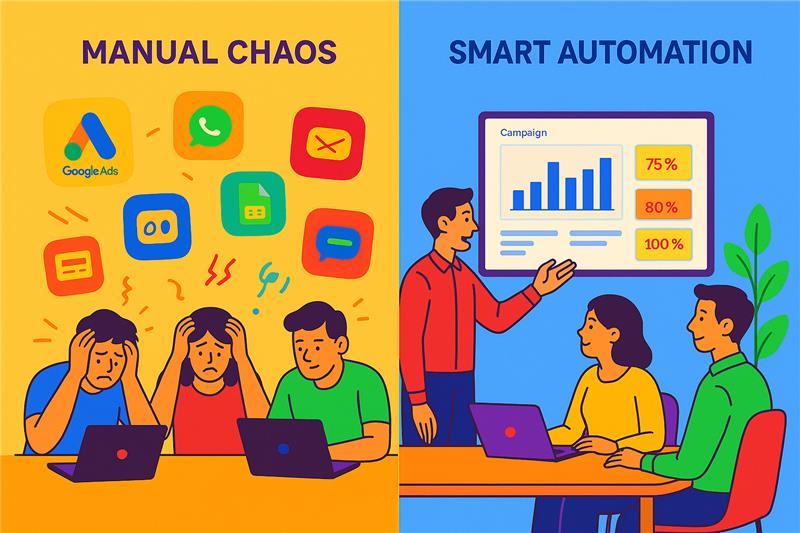
It's 2025 — and yet, for most eCommerce teams, marketing still feels like stitching together five different tools just to launch one campaign.
You create designs in one app, write content in another, schedule posts separately, set up ads manually, and hope nothing breaks before it goes live.
By the time you're done, the momentum is gone — and the team is already behind on the next one.
Why does marketing still feel this disconnected? And more importantly — how are fast-growing eCom brands streamlining their workflows without adding more people or platforms?
Problem 1: Campaign Creation Still Happens in Silos
Creative in Canva. Copy in Docs. Messaging in WhatsApp. Ads in different Platforms. Tracking in Excel.
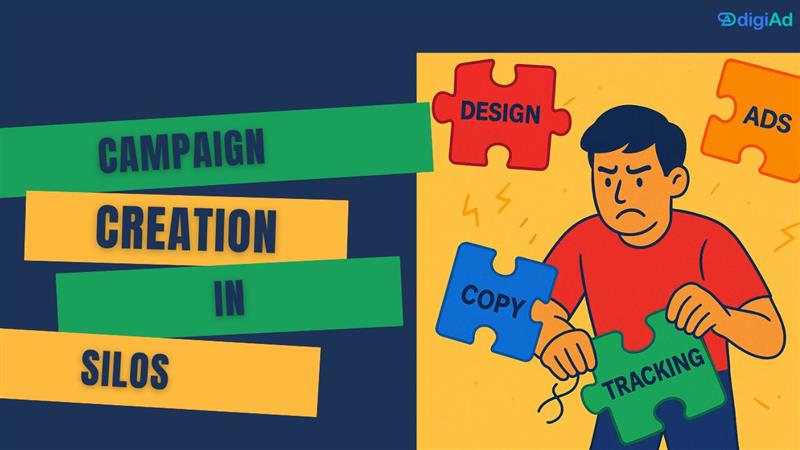
Every campaign is a patchwork project — built across tools that don't talk to each other.
This leads to:
- Repetitive content work
- Missed deadlines
- Teams spending hours just syncing updates
How Smart Teams Are Fixing It
Leading eCom brands are now rethinking their workflows to eliminate handoffs and duplication.
They:
- Build content libraries that feed into ad, post, and messaging formats
- Use central planning calendars for all marketing activities
- Design connected workflows across teams instead of jumping between apps
The goal isn't more tools. It's fewer tools that do more — together.
Problem 2: Messaging Feels Generic, Because It Is
It's hard to personalize content at scale — especially when time is tight.
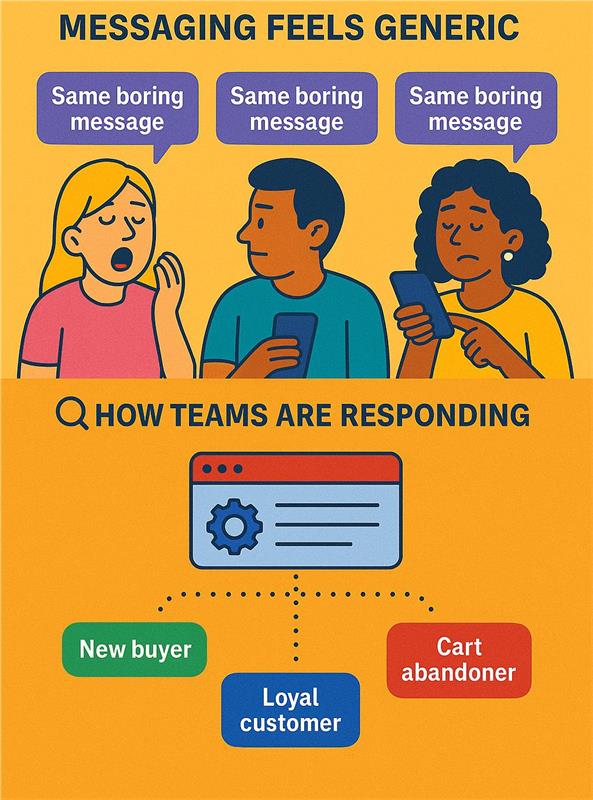
But when every shopper sees the same offer, the same copy, the same tone… they scroll past it.
And that means:
- Lower engagement
- Lost repeat customers
- Shallow brand connection
How Teams Are Responding
Smart brands are building message variation into their process — without adding manual work.
They're:
- Pre-writing content for different buyer types (new, loyal, inactive)
- Using templates that auto-adjust for tone, urgency, or language
- Automating message delivery based on behavior, not guesswork
It's not personalization by hand. It's personalization by system.
Problem 3: Social Media is Always Playing Catch-Up
When campaigns go live, social content often lags behind — because it's treated separately.
But today's buyers don't just see ads. They see the feed. They see Stories. They check consistency.
When your social posts don't match your campaigns, it creates confusion — or worse, indifference.
What Modern Teams Are Doing Differently
Rather than making social an afterthought, teams now:
- Sync campaign launches with social calendars
- Use AI tools to auto-generate captions and post ideas from product pages
- Pre-schedule posts that align with paid campaigns and promotions
They treat social as an integrated part of the launch — not a side task.
Problem 4: Language Limits Reach
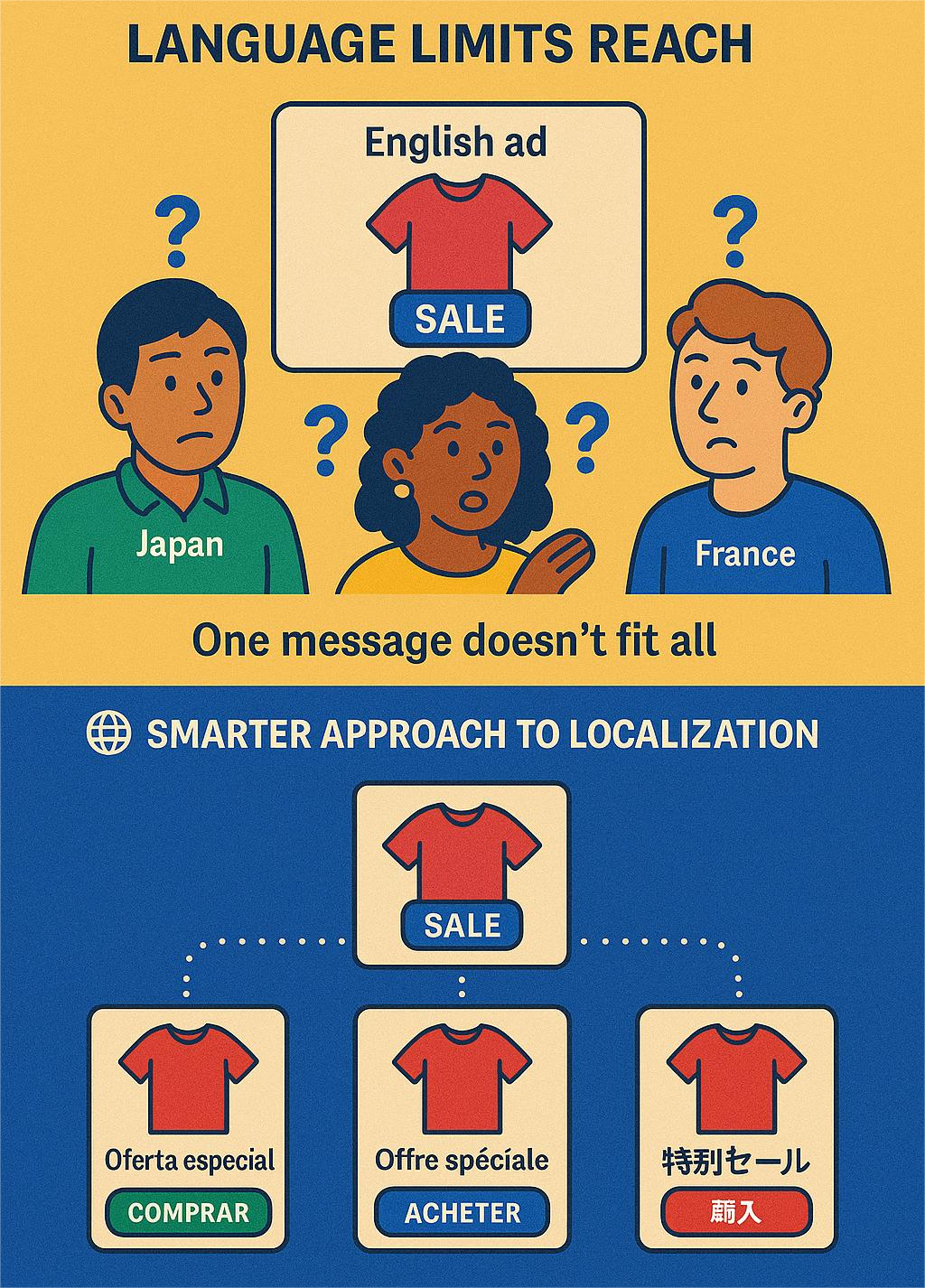
English-only marketing may work for a small audience. But if your customers span multiple regions, languages, and cultural contexts — your message can't.
The Smarter Approach
Instead of translating manually, growth-focused eCom brands now:
- Write content in a base language, then localize it before launch
- Adjust copy tone and images to fit regional preferences
- Launch regional variations of the same campaign — not just translate, but truly adapt
Localization has become part of campaign planning, not an extra step.
Problem 5: Campaign Launches Take Too Long
Even with the right team, campaign coordination takes time.
By the time ads are live, messages sent, and posts published — you've already lost prime audience attention.
How Agile Teams Speed Things Up
Instead of planning one channel at a time, smart teams:
- Plan campaigns centrally — messaging, visuals, platforms, timing
- Pre-schedule everything from one calendar
- Move from idea to launch in hours, not days
It's not about rushing. It's about being ready.
Final Word: It's Not About Ads — It's About the Workflow
The smartest eCommerce brands today aren't just running better ads.
They've rebuilt the way they create, manage, and launch campaigns — across every channel.
Their advantage isn't more budget or bigger teams.
It's a connected process that removes friction, automates where it matters, and keeps creative, messaging, and delivery moving together.
Because in 2025, growth doesn't come from working harder.
It comes from working smarter — before the campaign even goes live.